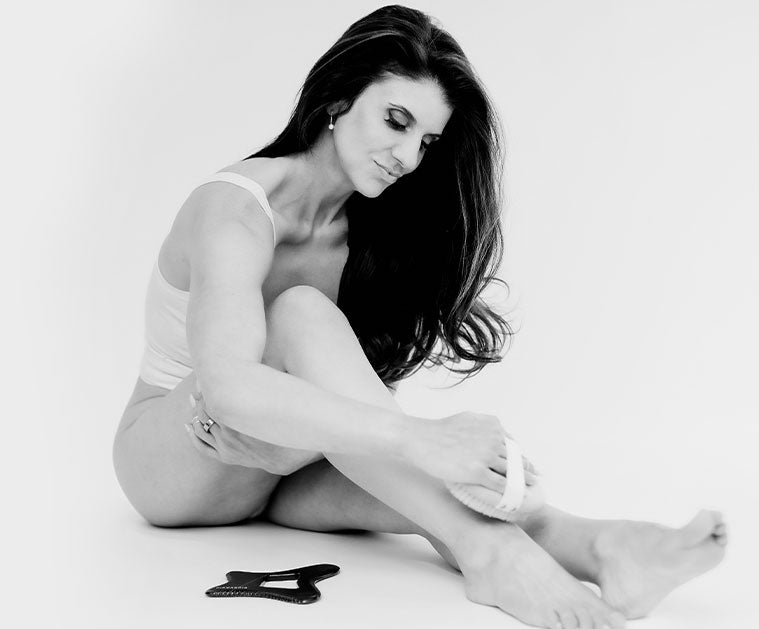
Dry Brushing vs Gua Sha: Which Supports Inflammation and Circulation Better?

Should I Dry Brush Before or After Using Gua Sha?
Always dry brush before gua sha. Dry brushing uses firm, sweeping strokes on dry skin to loosen dead cells and stimulate superficial circulation. Once the skin is prepped, gua sha follows with deeper mechanical pressure that supports lymphatic flow and helps guide fluid toward the body’s drainage points.
Think of dry brushing as priming the surface and gua sha as refining the movement underneath. Together, they form a complete sequence that supports visible tone and relief from puffiness—without relying on detox language or extreme pressure.
Does Dry Brushing Help Inflammation or Lymphatic Drainage?
Yes, in a limited but valuable way. Dry brushing promotes gentle exfoliation and stimulates capillary activity near the skin’s surface. This helps awaken circulation and warm tissues, preparing them for more targeted lymph movement.
While dry brushing alone doesn’t move deeper lymphatic fluid, it’s a strong first step in any anti-inflammatory body routine. Regular use can reduce surface dullness, encourage better product absorption, and provide a mild “energizing” effect that pairs well with gua sha.
How Often Should I Dry Brush to Support Circulation?
Most people benefit from 2–4 dry brushing sessions per week. Start with light pressure and short sessions (2–3 minutes) to avoid irritation.
Ideal timing:
- Morning: to stimulate energy and circulation.
- Before showering: to clear dead skin and prep pores.
Always follow with a clean, nutrient-rich oil to rehydrate the skin and prevent dryness.
What’s the Difference Between Dry Brushing and Gua Sha?
|
Feature |
Dry Brushing |
Gua Sha |
|
Surface Level |
Works on the outer skin layer to exfoliate and stimulate |
Works deeper on fascia and lymphatic pathways |
|
Tools Used |
Natural bristle brush |
Bian Stone or contoured gua sha tool |
|
Medium |
Used on dry skin |
Used with oil |
|
Primary Benefit |
Exfoliation and superficial circulation |
Lymph movement and fluid redistribution |
|
Duration |
2–3 minutes |
3–5 minutes |
Both promote movement, but gua sha creates more targeted, lasting support for swelling and inflammation. Combining them enhances results—dry brushing wakes the skin, gua sha calms it.
Can I Combine Dry Brushing and Gua Sha in One Routine?
Absolutely—and it’s the most effective approach. Here’s a quick, 4-minute combination routine:
- Dry Brush (1-2 minutes) – Start at ankles, brush upward toward knees; repeat on arms and torso.
- Shower (optional) – Rinse off loosened skin cells.
- Apply Body Oil – Choose a formulation free from seed oils and additives.
- Body Gua Sha (1-2 minutes) – Glide tool upward along the same paths, focusing on calves, thighs, and arms.
This combination supports both surface exfoliation and deeper lymphatic motion. The skin looks brighter, and the body feels less heavy—all achieved with real, mechanical movement.
Why It Works
Inflammation and puffiness often stem from fluid stagnation and poor circulation.
Dry brushing activates surface blood flow, while gua sha promotes directional movement of that fluid through the lymph system.
Used together, they form a minimalist, evidence-based system to keep the body’s natural rhythm in motion.
Final Thought
Dry brushing vs gua sha isn’t a competition—it’s a sequence. The brush prepares, the tool perfects, and the result is a body that feels restored and awake. Four minutes a few times a week can replace hours of passive recovery.
Simple, effective, repeatable.