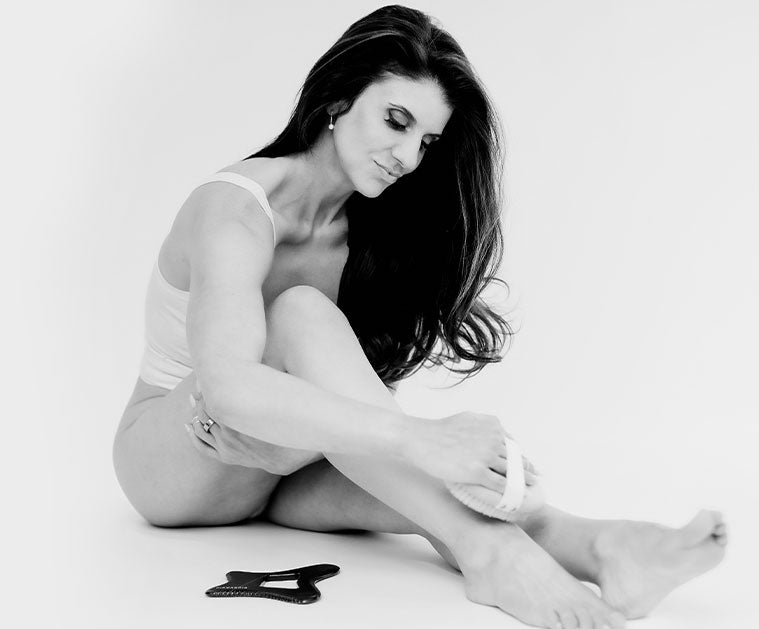
Gua Sha for Travel: My Ritual for Inflammation + Grounding

Why Does Travel Trigger Inflammation and Puffiness?
Travel puts the body into a low-movement state for long periods of time, which slows circulation and reduces natural lymph flow. That combination is one of the biggest reasons people experience swelling in the legs, tightness in the hips, and puffiness in the face after flying.
Cabin pressure changes and dry air can also contribute to dehydration, which makes the body hold fluid more aggressively. The result is not “weight gain” or something you need to panic about. It’s your body responding to stress, stillness, and imbalance.
That’s why post-travel recovery works best when it focuses on restoring movement in a simple, mechanical way.
Can Gua Sha Help With Water Retention After Flying?
Yes. Gua sha can support travel recovery by encouraging circulation and helping guide fluid movement through the lymphatic system. While it’s not a medical treatment for inflammation, it is an effective physical technique that helps reduce visible puffiness and stiffness caused by prolonged sitting.
The key is using consistent, directional strokes. After flying, the body tends to hold fluid in the legs and lower body, so gua sha becomes most effective when it starts low and works upward.
Used correctly, gua sha can make the body feel lighter and less “stuck” after travel without requiring an intense routine.
Why I Call This a Travel Ritual (But It’s Really a Routine)
When I say “ritual,” I don’t mean anything dramatic or time-consuming. I mean something repeatable. Travel throws off everything: sleep, movement, hydration, and schedule. When that happens, even a small routine becomes grounding because it creates structure in the middle of chaos. 4 minutes can change everything,
This is the one routine I can do no matter where I am. It’s fast, requires minimal space, and helps me feel like my body is back online again. It also supports my skin and body at the same time, which matters when you’re traveling and trying to stay consistent.
The goal isn’t perfection. The goal is getting back to baseline.
What Areas Should You Focus on When Using Gua Sha for Travel?
Most travel inflammation shows up in predictable places. The legs are the first priority because they hold the most fluid after long periods of sitting. The second priority is the upper body, especially the neck and shoulders, where tension builds during flights and long drives.
If time is limited, focus on these areas in this order:
· Calves and ankles
· Abdominal and mid-section
· Thighs and hips
· Arms and shoulders
· Neck and collarbone
The biggest difference comes from doing the same motion consistently instead of jumping around the body randomly.
The 4-Minute Gua Sha for Travel Routine
This routine is designed to be realistic. It fits into a hotel bathroom, an airport reset, or the first hour after landing.
Start by applying body oil to slightly damp skin. The oil matters because it allows the tool to glide without dragging, and it helps keep the skin barrier supported after travel dehydration.
Then begin with slow upward strokes from the ankles toward the knees. Repeat the same motion several times before moving upward to the thighs. This is where fluid tends to sit after flying, so consistent strokes here matter more than speed.
After legs, move to the arms using upward strokes from wrist to shoulder. Then finish with gentle strokes down the neck toward the collarbone to support drainage and ease facial puffiness.
Four minutes is enough to create real impact. The goal is to restore movement, not to turn recovery into a workout.
How Often Should You Use Gua Sha While Traveling?
The most effective approach is consistency with light pressure. For travel days, one short session after arrival is often enough. If swelling is noticeable the next morning, repeating the routine for another 3–4 minutes can help reduce heaviness and stiffness.
Many people find that gua sha works best when used:
· After landing
· Before bed on travel days
· The next morning if puffiness persists
The routine stays effective because it is repeatable and gentle. Overdoing pressure or scrubbing aggressively doesn’t create better results. It usually leads to irritation and makes the habit harder to maintain.
Why This Routine Feels Grounding (Without Overcomplicating It)
Grounding, in the context of travel, is simple. It means your body feels stable again. When swelling reduces, tension releases, and circulation starts moving, the nervous system often follows. That’s the quiet benefit of doing something mechanical and consistent instead of trying to force the body back into control.
This routine gives structure during travel, especially when everything else feels scattered. It takes minutes, but the effect lasts longer because it helps the body return to a more balanced state.
Final Thought
Gua sha for travel is one of the simplest ways to support inflammation and puffiness without relying on extreme solutions. It’s not a trend and it’s not a ritual for show. It’s a short, practical routine that supports circulation, helps fluid move, and makes the body feel lighter after long periods of stillness.
The best part is that it works anywhere. If you travel often, this becomes less of an extra step and more of a non-negotiable tool for staying consistent and grounded.